Mild weather has been the rule so far this fall, but a quick-hitting Arctic blast to start this week serves as a reminder that winter is not far off. So what does the winter season have in store for the Mid-South? Seasonal forecasting requires a look at oceanic-atmospheric patterns on a global scale, called teleconnections, to help determine potential weather trends.
Teleconnections drive large-scale weather patterns
The most recognizable of these teleconnections is the state of the El Niño Southern Oscillation (or ENSO), which is driven by sea-surface ocean temperatures in the equatorial Pacific. If ocean waters off the coast of South America are warmer than average, El Niño conditions exist. When cooler than average, it is termed La Niña. While other teleconnections (such as the North Atlantic Oscillation) can have a strong influence on weather patterns as well, they tend to be shorter lived and less predictable. ENSO typically serves as the baseline for long-range forecasts.
El Niño and La Niña can be of varying strengths depending on how much the ocean temperatures differ from normal, thus downstream impacts can be pronounced or muted. As we approach winter 2025-2026, La Niña conditions are emerging, but it is expected to be a fairly weak and likely short-lived La Niña. By late winter, a transition back towards ENSO neutral conditions is forecast.
Impacts of a La Niña winter
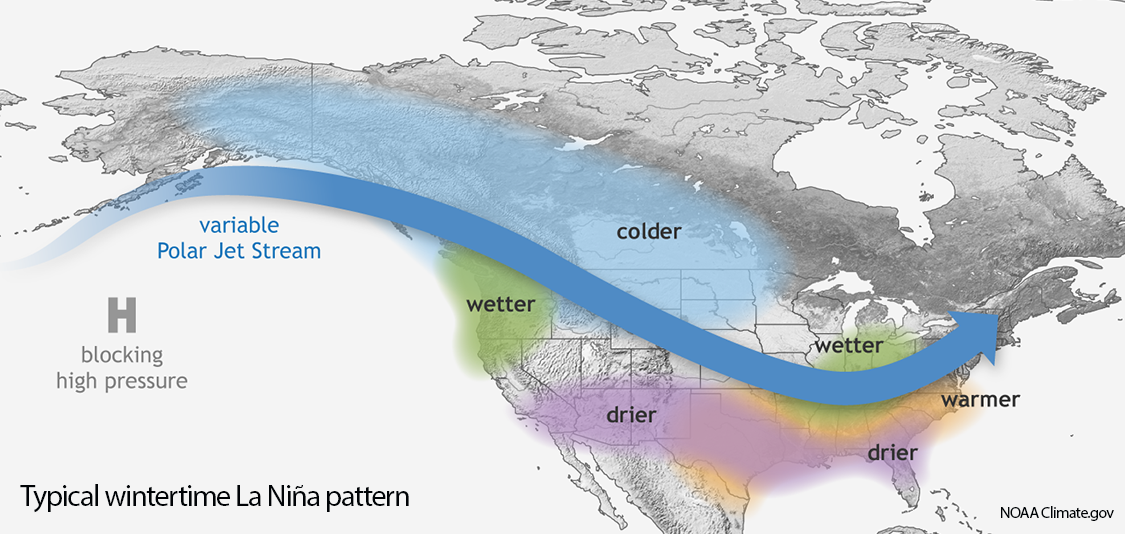
How does the atmosphere over the United States respond during a La Niña? While conditions can be variable, generally the northern United States tends to be colder and wetter than average, while the southern United States averages warmer and drier than normal. However, variability results from the position of the Polar jet stream, which can drift north and south a fair amount during a La Niña winter. As it moves further south, Arctic air spills into the southern states.
Areas including the Mid-South tend to be in a “battle zone,” alternating between warm and very cold. With passing fronts, precipitation is enhanced, particularly in the Ohio and Tennessee Valleys, but also further south into the Mid-South. In addition, when a potent Arctic front encounters warmer air residing over the southeast region, it is not unusual to see a round of strong to severe thunderstorms along the collision zone, particularly late in the winter.
NOAA’s winter outlook for 2025-2026
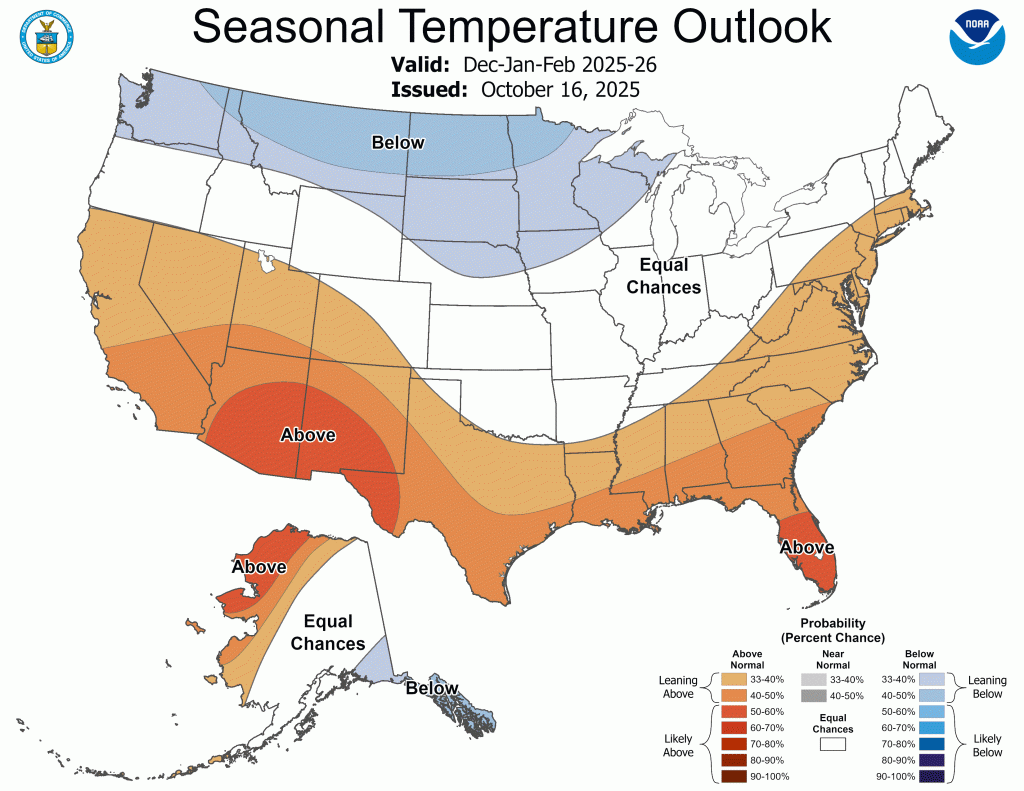
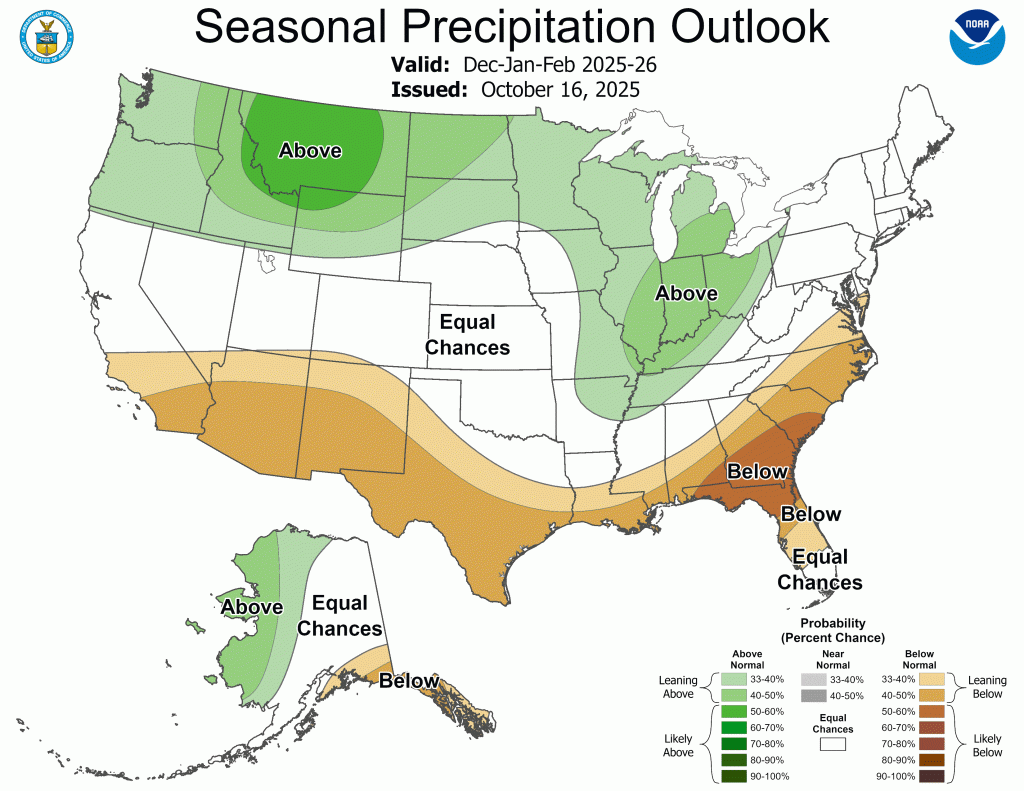
Recently, the National Oceanic and Atmospheric Administration (NOAA), released the latest seasonal temperature and precipitation outlook for this winter (December 2025 through February 2026). The outlook depicts a fairly classic La Niña pattern: warm and dry across the southern tier of states and cold and wet across the north. There is also an area of above average precipitation forecast across the Midwest and Ohio Valley, with a slight enhancement over the Mid-South.
Winter outlook for the Mid-South
An average winter day in the Bluff City would see high temperatures in the lower to mid 50s and low temperatures in the lower to mid 30s. Memphis averages about 14 inches of precipitation from December through February and about 2.7 inches of snow each winter, though that varies widely from year to year.
This winter, the combination of being located in a battle zone between warm and cold airmasses and a tendency towards enhanced precipitation likely ensures a “mixed bag” for the Memphis area. In other words: roller coaster temperatures that end up averaging near normal with a chance of winter precipitation (snow and/or ice) in the coldest part of the season and strong thunderstorms, particularly in late winter. Overall, precipitation likely ends slightly above normal.
Part of living in the Mid-South is experiencing variability in the cool season. This seasoned Mid-Southerner will tell you to prepare for anything!
Erik Proseus
MWN Meteorologist
—
Follow MWN on Facebook, Twitter/X, BlueSky, Threads and Instagram for the routine updates every day!
Visit MemphisWeather.net for the latest weather information and our MWN Forecast for Memphis and the Mid-South
Looking for a way to support us? Click here for one-time or recurring options! Thank you!